
The Opportunity
A Problem the Size of Australia
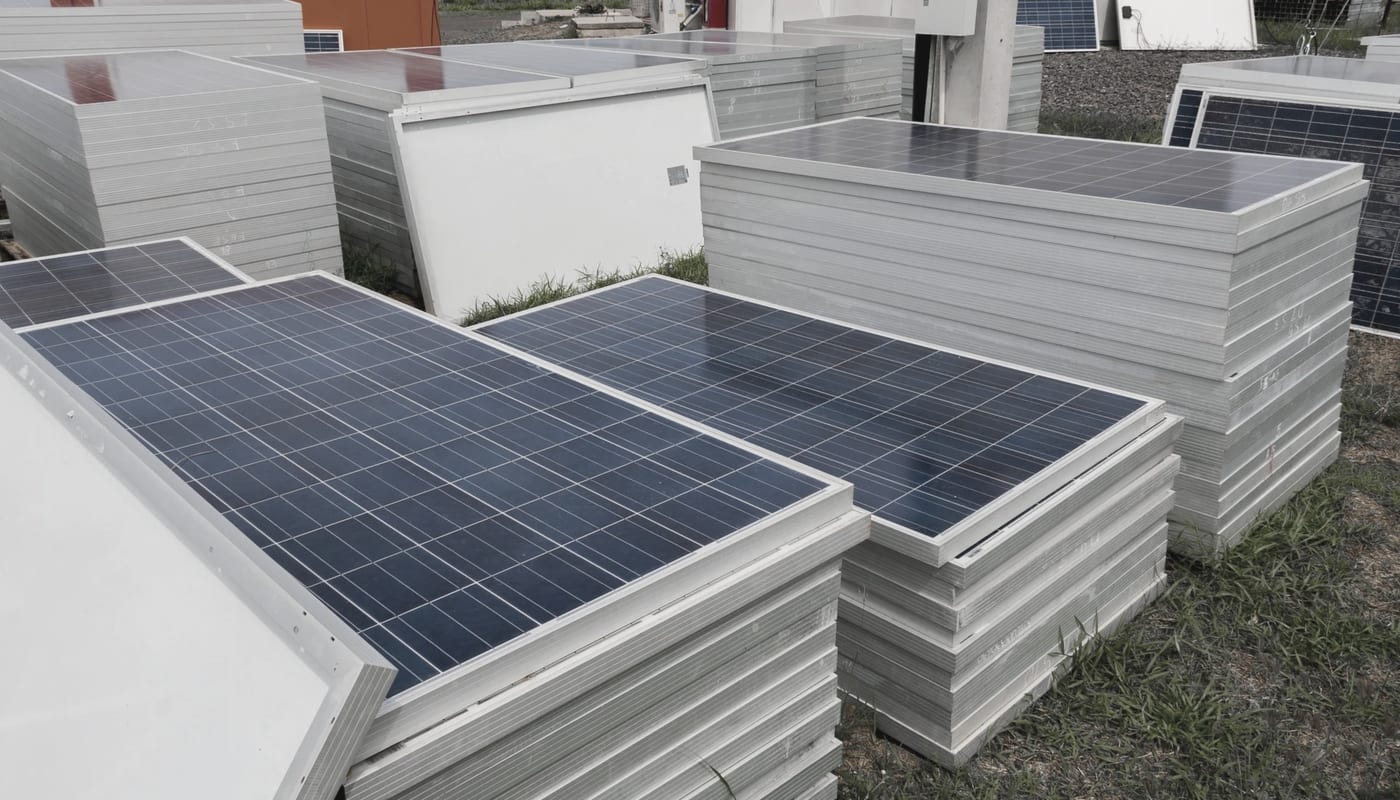
Australia's rooftop-solar success is creating its next infrastructure challenge. Large and growing volumes of panels will reach end of life over the coming years — creating both a waste-management challenge and an opportunity to build new circular-economy capability.
The Challenge
Solar's Hidden Waste Problem
Australia has one of the highest rates of solar panel adoption per capita in the world. That success story is now creating an urgent downstream challenge: a rapidly growing wave of end-of-life panels with nowhere to go.
Solar modules contain significant quantities of glass and aluminium, as well as smaller but valuable quantities of silicon, silver and copper. Without proper end-of-life pathways, these materials are lost — and panels risk ending up in landfill.
Better recovery can reduce material loss, create new secondary-resource streams and strengthen Australia's capability to manage clean-energy infrastructure at end of life.
~100,000 t
estimated annual solar panel waste in Australia by 2035
Source: CSIRO / APVI estimates — figures TBC
3.6M+
Australian homes with rooftop solar
Source: Clean Energy Council — figures TBC
>90%
of panel materials recoverable with the right process
Industry estimate — figures TBC
Market Scale
A Growing Global Imperative
The end-of-life solar challenge is not unique to Australia — it is a global issue. The International Renewable Energy Agency (IRENA) projects that cumulative solar panel waste could reach 78 million tonnes globally by 2050.
HAS sees an opportunity to combine advanced recycling technology with practical collection and processing pathways that work for installers, distributors and the broader solar industry.
Australia is uniquely positioned to lead — with one of the world's highest solar adoption rates, a strong regulatory environment, and deep expertise in resource recovery.

Circular Economy
Closing the Loop
Solar modules contain significant recoverable value. Glass and aluminium make up the bulk of panel mass, while silicon, silver and copper — present in smaller quantities — represent high-value secondary resources.
A true circular economy for solar panels means recovering these materials at the highest possible grade and returning them to productive use — in new solar panels, in electronics, in construction, or in other high-value applications.
Recover
Collect and process end-of-life solar panels, safely separating components and recovering materials that would otherwise be lost.
Recirculate
Return recovered materials — silicon, silver, copper, aluminium, glass — to domestic supply chains at the highest possible grade and value.
Scale
Build the infrastructure, partnerships and regulatory frameworks to operate at national scale and serve Australia's growing recycling need.
Why Australia & NSW
Sovereign Capability for a National Challenge
Commercialising advanced solar recycling locally can create skilled jobs, improve installer productivity, retain more material value in Australia and position New South Wales as an early leader in the circular management of solar infrastructure.
01
Shipping end-of-life panels overseas for processing is costly, carbon-intensive, and transfers the value of recovered materials out of the country. Building domestic capability keeps that value onshore.
02
Local recycling infrastructure improves installer productivity — reducing the complexity and cost of responsible panel disposal and creating clear, accessible end-of-life pathways for the industry.
03
New South Wales has the opportunity to be an early leader in the circular management of solar infrastructure — setting the standard for how Australia handles clean-energy waste at scale.
Ready to Be Part of the Solution?
Whether you're a solar installer, asset owner, manufacturer or investor — there's a role for you in Australia's solar circular economy.